SYMBOLISM - RECOGNIZING & BUILDING
SYMBOLISM - RECOGNIZING & BUILDING
I'm working on a short story and wondering about recognizing what is symbolic within the story and how I might build upon that to make the story more meaningful. What steps do you take to recognize the themes running through your work and how to use symbolism to make it stronger?

Re: SYMBOLISM - RECOGNIZING & BUILDING
I know Symbolism as a literary art movement reacting to Romanticism, Realism, and Naturalism. Symbolism pursues intangible aesthetics of existence that defy literal interpretations. In a sense, Symbolism is the art of figurative language for depicting the undepictable through metaphor and analogy.
Getting into the figurative meaning of a story during reading requires a little more effort than casual readers generally like to make, so deep analogies and metaphors are not a best practice for building audience rapport. On the other hand, getting at a story's theme sometimes is easier to unravel by examining the motifs of a story. Some writers, readers, critics call motifs tropes, but prescriptively, a trope is typically not more than a few words or a passage in length. A term has emerged that some use, literary tropes, meaning an overarching extended analogy or allegory.
But it's motifs that are important for unraveling a thematic meaning. For a simplistic access to understanding motifs, consider a theme-oriented social event, say Cinco de Mayo. The motifs might then be Mexican foods, beverages, cervezas, decorations, apparel, etc.
A story about magic's perils might have motifs that depict the fallout of magic gone wrong, say, horrible disfigurements. A story about the hazzards of hubris might have motifs derived from the Seven Deadly Sins. A story about aging might have motifs from later life stage initiation trials, like creaky bones, dietary restrictions, worries about retirement, concerns about up and coming challengers eager to replace a character at the top of the hill, etc.
Motifs can be objects, settings, characters, events, ideas, etc. In my opinion, though, it's a best practice to have a central theme, moral, and message at some point in the writing process to unify a story in all its parts, especially its motifs. A keg of Irish porter would be discordant at a Cinco de Mayo party, for example.
Getting into the figurative meaning of a story during reading requires a little more effort than casual readers generally like to make, so deep analogies and metaphors are not a best practice for building audience rapport. On the other hand, getting at a story's theme sometimes is easier to unravel by examining the motifs of a story. Some writers, readers, critics call motifs tropes, but prescriptively, a trope is typically not more than a few words or a passage in length. A term has emerged that some use, literary tropes, meaning an overarching extended analogy or allegory.
But it's motifs that are important for unraveling a thematic meaning. For a simplistic access to understanding motifs, consider a theme-oriented social event, say Cinco de Mayo. The motifs might then be Mexican foods, beverages, cervezas, decorations, apparel, etc.
A story about magic's perils might have motifs that depict the fallout of magic gone wrong, say, horrible disfigurements. A story about the hazzards of hubris might have motifs derived from the Seven Deadly Sins. A story about aging might have motifs from later life stage initiation trials, like creaky bones, dietary restrictions, worries about retirement, concerns about up and coming challengers eager to replace a character at the top of the hill, etc.
Motifs can be objects, settings, characters, events, ideas, etc. In my opinion, though, it's a best practice to have a central theme, moral, and message at some point in the writing process to unify a story in all its parts, especially its motifs. A keg of Irish porter would be discordant at a Cinco de Mayo party, for example.
Spread the love of written word.
Re: SYMBOLISM - RECOGNIZING & BUILDING
Thanks, Polymath. You correctly discerned that my question related to symbolic objects or images within the work and not to Symbolism. I'm a little embarrassed, but, oh well, at least I learned something and won't make that mistake again.
I often have difficulty extracting a theme from my work and yet I continue to try. Identifying some object or image that appears more than once seems to help.
This is the story: A man sees the lights from a police cruiser across the street at his neighbors and is reminded of an incident that occurred when he was a boy in the 1960's. While he and his sister are playing on the kitchen floor, a policeman knocks on his door. He discovers the officer is there for his dad - the police have discovered who stole the money from the hardware store the boy's father owns in partnership with his brother. The father and the policeman go out to the car and as the children wait they begin to play as the mother does the dishes. The girls uses the boy's toy truck and eventually he strikes her with the toy six gun that he wears everywhere. His mother grabs him and shakes him quite violently for what he's done to his sister. At that moment the father enters and the boy discovers that his uncle, his father's brother, is the thief.
So the theme is embedded in what happens in the story. It is never actually stated. The recurring images are the red flashing lights of the cruiser, his mother's hands, his sister's blonde curls, a window through which they can see the cruiser, the six guns. Pretty simple, yes. Nothing out of place, nothing jarring, I don't think. I'm doing a revision at this point, and that's what got me thinking about symbols and theme.
I will never have your intellectual approach or your vast knowledge, Poly, but I do try to write stories as well as I can and to try to expand the tools in my writer's toolbox in order to be able to do that. Thanks for taking the time to comment.
I often have difficulty extracting a theme from my work and yet I continue to try. Identifying some object or image that appears more than once seems to help.
This is the story: A man sees the lights from a police cruiser across the street at his neighbors and is reminded of an incident that occurred when he was a boy in the 1960's. While he and his sister are playing on the kitchen floor, a policeman knocks on his door. He discovers the officer is there for his dad - the police have discovered who stole the money from the hardware store the boy's father owns in partnership with his brother. The father and the policeman go out to the car and as the children wait they begin to play as the mother does the dishes. The girls uses the boy's toy truck and eventually he strikes her with the toy six gun that he wears everywhere. His mother grabs him and shakes him quite violently for what he's done to his sister. At that moment the father enters and the boy discovers that his uncle, his father's brother, is the thief.
So the theme is embedded in what happens in the story. It is never actually stated. The recurring images are the red flashing lights of the cruiser, his mother's hands, his sister's blonde curls, a window through which they can see the cruiser, the six guns. Pretty simple, yes. Nothing out of place, nothing jarring, I don't think. I'm doing a revision at this point, and that's what got me thinking about symbols and theme.
I will never have your intellectual approach or your vast knowledge, Poly, but I do try to write stories as well as I can and to try to expand the tools in my writer's toolbox in order to be able to do that. Thanks for taking the time to comment.
-
Bryan Russell/Ink

- Posts: 430
- Joined: December 20th, 2009, 10:44 pm
- Contact:
Re: SYMBOLISM - RECOGNIZING & BUILDING
GeeGee, it's a bit like playing connect-the-dots now. Half the answer is what you've just given, the important and repeated images. Now you can look for ways to play that up, perhaps. One might be the light (police cruisers), and the other might be hands. What other ways can you use these? Are there other scenes where light and hands might be used to create a connection with these central events? It can be almost unnoticed, but the mind absorbs it almost as atmosphere. The subtle interconnections. So, maybe in other important scenes there's an increased focus on hands, on what the actions of hands mean. I think if you approach it like that you can find ways to weave the motifs into the very texture of the story.
Best,
Ink
Best,
Ink
The Alchemy of Writing at www.alchemyofwriting.blogspot.com
Re: SYMBOLISM - RECOGNIZING & BUILDING
You're welcome, GeeGee55. And no need for embarrassment. I didn't intend to correct so much as illuminate discrete attributes of story craft for the sake of a deeper understanding. Symbolism, for example, is a term like any of the manifold terms of literary-creative devices, with many usages and meanings, often with great differences in usage from context to context. Basically, its variant meanings have evolved connotatively from its denotative roots.
From the story synopsis given, I see two parallel themes that connect up to make a possible potent statement. The daughter taking the truck. The son striking the daughter with a toy six gun. The mother shaking the son violently for his violent act. The uncle stealing from the father, his partner and brother. Theft and violent crimes perpetrated against close family--loved ones, right? We hurt the ones we love because we hurt? Misery loves company? The sins of the parents will be inherited by the children? Lots of potential messages based on those potential themes. The son hitting his sister then connects to the mother's abuse and the brother stealing from his brother.
The hands then might relate to the agencies of hurt. Mother's hands both nurturing and punishing. Laying hands on the truck, laying hands on the sister, hands on the son, hands on the money in the hardware store till. The police car lights flashing warning. The window as the inside hurt looking out on the world of hurt. The policeman symbolizing the societal conscience. I don't see the blonde curls fitting in as immediately unless they symoblize innocence defiled or trust betrayed or some other such metaphor.
One or another poeticist has stated Unity is the Law. If there is one about creative writing, Unity certainly is in the vanguard of near absolutes. Theme is the unifier of story. Related to theme are moral, message, motif, and in a less direct way, subtext relates to theme too.
From the story synopsis given, I see two parallel themes that connect up to make a possible potent statement. The daughter taking the truck. The son striking the daughter with a toy six gun. The mother shaking the son violently for his violent act. The uncle stealing from the father, his partner and brother. Theft and violent crimes perpetrated against close family--loved ones, right? We hurt the ones we love because we hurt? Misery loves company? The sins of the parents will be inherited by the children? Lots of potential messages based on those potential themes. The son hitting his sister then connects to the mother's abuse and the brother stealing from his brother.
The hands then might relate to the agencies of hurt. Mother's hands both nurturing and punishing. Laying hands on the truck, laying hands on the sister, hands on the son, hands on the money in the hardware store till. The police car lights flashing warning. The window as the inside hurt looking out on the world of hurt. The policeman symbolizing the societal conscience. I don't see the blonde curls fitting in as immediately unless they symoblize innocence defiled or trust betrayed or some other such metaphor.
One or another poeticist has stated Unity is the Law. If there is one about creative writing, Unity certainly is in the vanguard of near absolutes. Theme is the unifier of story. Related to theme are moral, message, motif, and in a less direct way, subtext relates to theme too.
Spread the love of written word.

Re: SYMBOLISM - RECOGNIZING & BUILDING
I came across this on one of my favorite sites:
http://thebookshelfmuse.blogspot.com/20 ... aurus.html
http://thebookshelfmuse.blogspot.com/20 ... aurus.html
Robin
"A glass slipper is only a shoe. Dreamers who only dream never have their dreams come true."
http://www.RobynLucas.com/
"A glass slipper is only a shoe. Dreamers who only dream never have their dreams come true."
http://www.RobynLucas.com/
-
marilyn peake
- Posts: 304
- Joined: December 7th, 2009, 4:29 pm
- Contact:
Re: SYMBOLISM - RECOGNIZING & BUILDING
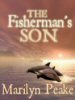
If I think symbolic meaning is inherent in a part of the story I’m writing, I’ll repeat that symbolic theme again later on if it naturally fits in the developing story. For example, at the beginning of my middle grade fantasy novel, THE FISHERMAN’S SON, the main character, a twelve-year-old boy living on an island around the beginning of the nineteenth century, loses his mother to a disease passing through their village. When he goes through a forest to find a priest in the neighboring village to provide burial services for his mother, he’s visited by a beautiful fairy godmother type woman. As I wrote the sections about this magical woman, I developed her in such a way that she would represent pure goodness, a fairy godmother and an adult guide, but she could also possibly be the main character’s mother speaking to him and watching over him from beyond the grave. I never presented the magical woman as his mother because she really was a magical figure, but I wanted the symbolism to be there. I wanted the magical woman to be the archetypal mother figure.
Marilyn Peake
Novels: THE FISHERMAN’S SON TRILOGY and GODS IN THE MACHINE. Numerous short stories. Contributor to BOOK: THE SEQUEL. Editor of several additional books. Awards include Silver Award, 2007 ForeWord Magazine Book of the Year Awards.
Novels: THE FISHERMAN’S SON TRILOGY and GODS IN THE MACHINE. Numerous short stories. Contributor to BOOK: THE SEQUEL. Editor of several additional books. Awards include Silver Award, 2007 ForeWord Magazine Book of the Year Awards.

Re: SYMBOLISM - RECOGNIZING & BUILDING
Hmmm. I may be wrong about this.....
But I think it may be better not to consciously try to build symbolism into your work as a major focus. Doing that risks a certain pretentiousness or self-consciousness on the part of the author that shows through in the writing. If the reader picks up that you are deliberately imposing symbolism on them, you risk their annoyance.
Well, you'd risk mine anyway. If I pick up a book and it's bopping me over the head with intentional symbols, I want to throw it across the room and stomp on it. It's too....controlling. Let me, as a reader, go where I want to go.
On top of that, it's very hard to have symbolism ring true if it's consciously constructed. It will feel forced.
If ideas come naturally - for example, it makes sense for this person to be a mother figure archtype, or for some reason you want a bit of red in every scene, that's cool. But I think it's dangerous to over-think it. Let your unconscious take care of the symbolism. Write the book, and see where it takes you.
Those are my two cents, for what it's worth.
But I think it may be better not to consciously try to build symbolism into your work as a major focus. Doing that risks a certain pretentiousness or self-consciousness on the part of the author that shows through in the writing. If the reader picks up that you are deliberately imposing symbolism on them, you risk their annoyance.
Well, you'd risk mine anyway. If I pick up a book and it's bopping me over the head with intentional symbols, I want to throw it across the room and stomp on it. It's too....controlling. Let me, as a reader, go where I want to go.
On top of that, it's very hard to have symbolism ring true if it's consciously constructed. It will feel forced.
If ideas come naturally - for example, it makes sense for this person to be a mother figure archtype, or for some reason you want a bit of red in every scene, that's cool. But I think it's dangerous to over-think it. Let your unconscious take care of the symbolism. Write the book, and see where it takes you.
Those are my two cents, for what it's worth.
My blog: http://mirascorner.blogspot.com/
Re: SYMBOLISM - RECOGNIZING & BUILDING
While grazing writing program Web sites, I came across the title of a graduate candidate's thesis* that blew me away. By Maud Casey: It’s a Wooden Leg First: Paying Narrative Attention to the Literal Level of the Story in Order to Achieve the Figurative. The sense I get from that is figurative meaning presents from the subconsciousness of a writer. Once it's apparent, it can be used to enhance meaning, build unity, and in doing so audience rapport, for literal if not figurative meaning. As Ink replied earlier, figurative meaning is part of the ambience of a story. When it's done well, and not in the foremind of a reader disrupting reading, it adds layers to reading satisfaction. I believe analyzing figurative meaning after draft writing offers strong trail blazing for rewriting and revising direction.
The point of It's a Wooden Leg First refers to Melville's Moby Dick. Captain Ahab's peg leg isn't made of wood. It's a scrimshawed whale bone, ostensibly a tooth from the Great White Whale who took Ahab's leg in an earlier encounter. They are a part of each other, metaphorically stating humankind and nature are inextricably bound. Human artifice is as much a part of nature's glory as it is seemingly external to nature. Humanity contending against nature is as natural as the contentions between predator and prey.
------
* Edit: Maud Casey isn't a graduate student. My mistake. She's a professor of fiction at Warren Wilson College's low residency MFA writing program. It's a Wooden Leg First is a recording of a lecture she gave for the 2008 winter residency. Available on CD by mail order for $8. http://www.warren-wilson.edu/~mfa/newwe ... rdings.php
The point of It's a Wooden Leg First refers to Melville's Moby Dick. Captain Ahab's peg leg isn't made of wood. It's a scrimshawed whale bone, ostensibly a tooth from the Great White Whale who took Ahab's leg in an earlier encounter. They are a part of each other, metaphorically stating humankind and nature are inextricably bound. Human artifice is as much a part of nature's glory as it is seemingly external to nature. Humanity contending against nature is as natural as the contentions between predator and prey.
------
* Edit: Maud Casey isn't a graduate student. My mistake. She's a professor of fiction at Warren Wilson College's low residency MFA writing program. It's a Wooden Leg First is a recording of a lecture she gave for the 2008 winter residency. Available on CD by mail order for $8. http://www.warren-wilson.edu/~mfa/newwe ... rdings.php
Last edited by polymath on April 21st, 2010, 6:58 pm, edited 1 time in total.
Spread the love of written word.
Re: SYMBOLISM - RECOGNIZING & BUILDING
Thank you, all of you, for the comments. I now have much to consider as I move forward with my revision.
Re: SYMBOLISM - RECOGNIZING & BUILDING
Interesting thread!
I have to say I completely agree with Mira. I do not consciously write symbolism into my stories, however, I have a very hardworking subconscious and symbolism seems rampant in my stories. But generally I get annoyed by heavy handed symbolism, the beat you over the head with the metaphor approach is a pet peeve of mine in film or literature.
Also, when I heard the name of that aritcle "It's a wooden leg first," I must admit my mind went to Flannery O'Connor first! But it sounds interesting, I will have to check it out.
I have to say I completely agree with Mira. I do not consciously write symbolism into my stories, however, I have a very hardworking subconscious and symbolism seems rampant in my stories. But generally I get annoyed by heavy handed symbolism, the beat you over the head with the metaphor approach is a pet peeve of mine in film or literature.
Also, when I heard the name of that aritcle "It's a wooden leg first," I must admit my mind went to Flannery O'Connor first! But it sounds interesting, I will have to check it out.
-
marilyn peake
- Posts: 304
- Joined: December 7th, 2009, 4:29 pm
- Contact:
Re: SYMBOLISM - RECOGNIZING & BUILDING
Mira - I agree. The symbolism should arise from the writer's subconscious. Once the symbols appear and the writer recognizes them for what they are, however, the writer can enjoy developing them. At least that's how it works for me. I think the best fiction includes some symbols that only become apparent to writer and/or reader much later on. As a writer, I absolutely love that experience. As a reader, I love deeply symbolic stories.
polymath - Exactly. The type of symbolism in MOBY DICK that you're describing is exquisite.
polymath - Exactly. The type of symbolism in MOBY DICK that you're describing is exquisite.
Marilyn Peake
Novels: THE FISHERMAN’S SON TRILOGY and GODS IN THE MACHINE. Numerous short stories. Contributor to BOOK: THE SEQUEL. Editor of several additional books. Awards include Silver Award, 2007 ForeWord Magazine Book of the Year Awards.
Novels: THE FISHERMAN’S SON TRILOGY and GODS IN THE MACHINE. Numerous short stories. Contributor to BOOK: THE SEQUEL. Editor of several additional books. Awards include Silver Award, 2007 ForeWord Magazine Book of the Year Awards.
Re: SYMBOLISM - RECOGNIZING & BUILDING
Polymath - what you wrote about Moby Dick gave me chills. I love symbolism. I also love dissecting stories, looking at symbolism - it's great fun.
Emily and Marilyn - thanks. And Marilyn, I totally agree. Once you see what your subconscious is up to, it's fun to develop that.
I just think it's best if the symbolism arises from the subconscious first. Although - I'm starting to feel very tenative about all this. It does seem as though people write very differently, and what may work for one person may not for another. So, I think it's always best to listen to people, and then trust your instincts.
But I will hold fast to the truth for me - which is symbolism that hits me over the head does not work for me as a reader. I prefer it to be more organic and subtle.
Emily and Marilyn - thanks. And Marilyn, I totally agree. Once you see what your subconscious is up to, it's fun to develop that.
I just think it's best if the symbolism arises from the subconscious first. Although - I'm starting to feel very tenative about all this. It does seem as though people write very differently, and what may work for one person may not for another. So, I think it's always best to listen to people, and then trust your instincts.
But I will hold fast to the truth for me - which is symbolism that hits me over the head does not work for me as a reader. I prefer it to be more organic and subtle.
My blog: http://mirascorner.blogspot.com/
-
Nathan Bransford

- Posts: 1562
- Joined: December 4th, 2009, 11:17 pm
- Location: Pasadena, CA
- Contact:
Re: SYMBOLISM - RECOGNIZING & BUILDING
Another "agree with Mira."
I once had a college professor who said something along the lines of, "If I can spot obvious symbolism I feel like the author is insulting my intelligence. If I can't spot it I don't know it's there so what's the point."
I once had a college professor who said something along the lines of, "If I can spot obvious symbolism I feel like the author is insulting my intelligence. If I can't spot it I don't know it's there so what's the point."
Re: SYMBOLISM - RECOGNIZING & BUILDING
I use symbolism as a form of foreshadowing.
The dreamy moment that starts a new section by overelaborating
on a center stage building's design or a main characters choice of clothing.
Usually after a long action sequence and the resolving dialogue between players.
Thinking over Nathans quote I think symbolism has to be both: brief and
non-intrusive to the pace: or a deliberate riddle with the answer embedded in the 2-3 paragraphs
to challenge the reader to take a stake in the outcome of the next series of conflict resolutions.
The dreamy moment that starts a new section by overelaborating
on a center stage building's design or a main characters choice of clothing.
Usually after a long action sequence and the resolving dialogue between players.
Thinking over Nathans quote I think symbolism has to be both: brief and
non-intrusive to the pace: or a deliberate riddle with the answer embedded in the 2-3 paragraphs
to challenge the reader to take a stake in the outcome of the next series of conflict resolutions.
Who is online
Users browsing this forum: No registered users and 1 guest